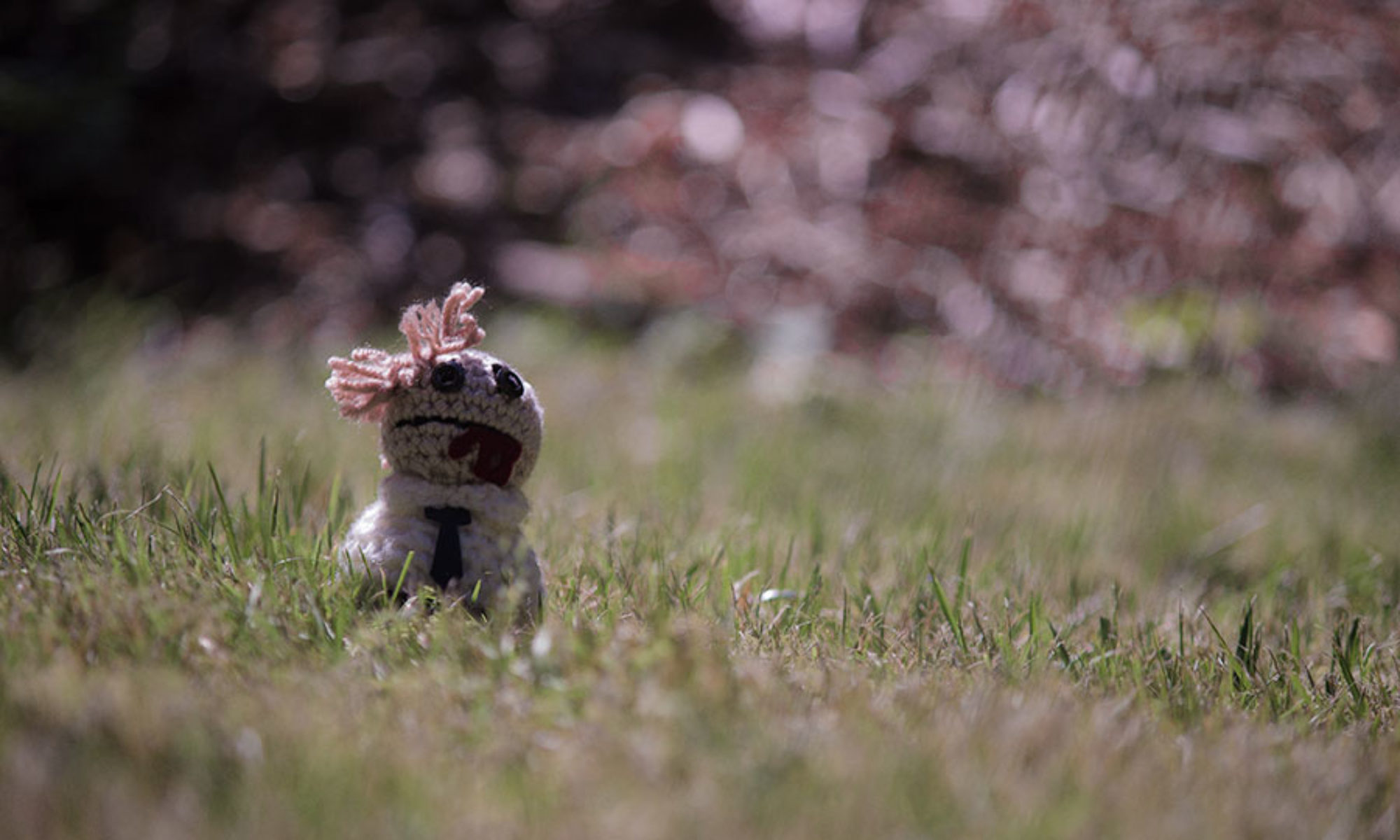

I’ll Sleep When I’m Reborn

fiction by Jason Edwards

The vampires in Portland are pretty cool I guess. Found one in this dive bar called Toreador, in the Alphabet district. I didn’t notice him at first because when I went in I had to take a wicked piss, so I made straight for the men’s room. Doors within doors. There were two guys at the urinals, frozen, or so it seemed like, and really creepy, in their identical baggy pants, thermal underwear sleeves under t-shirt, knit woolen caps. Like that guy at the end of The Blair Witch Project, just standing there. I mean, of course they were pissing, but it made me pause for a second. But only a second. No one was in the stall so I went in, another door, closed it, toed up the seat with my foot, and made a noise like one of those porno guys. Jesus Christ. But not as much blood in my urine, so I guess I was healing up.

When I was done I washed my hands and didn’t really notice there was no mirror above the sink, just a frame. But then I left the restroom and saw the vampire sitting at the bar, plain as night, and I realized he’d been there when I came in and I had missed it. That sent a shiver down my spine. Back in the day, missing a vampire and walking into the men’s room would have been my death sentence. They’ve got incredible instincts, and I know he would have clocked me for what I was, followed me, and did me right there. I stood there for a second, staring at him, and vampires are commonplace nowadays I guess but no so common that they’d don’t get stared at, but still. I shook myself out of it, shoved my hand in my pocket and cupped the tooth I had in there, then went and sat at the end of the bar. Ordered something local. Portland’s supposed to be famous for their hops or something.

Back in the day was about a year ago, and I was just getting good at vampire hunting, but I had to get out of it. My old buddy, Rebus, was closing in on his hundredth kill, but he was getting sloppy, and the vampires were just popping up everywhere. They were getting bold, just hanging out in places out in the open, and people were just accepting it. It kind of soured things, like, we sort of enjoyed the hunting and the shadows. Then we’d just see them places and we’d wait and follow them home and do them there. But it was too easy, and then it was like what’s the point? But Rebus wanted his century, and one night when I was doing something else, he followed one to a nest but one got away and followed him home and that’s where I found him.

It was pretty gnarly. He was naked, which made me nervous, because I didn’t know if the tooth in your pocket worked only when they did you or if it had to stay on you in the grave. If Rebus came back I’d have to do him and I did not relish the thought. I cleaned up the mess and tossed him an old factory incinerator we used when the ones we did didn’t go to ash, and I decided that was it for me, no more hunting. Still kept my tooth, just in case, but I’ve met several vampires since then, in bars and places and they can always tell. Like I said, instincts. But it’s like, they can also somehow tell that if I’m done it’s because they’re done so what’s the point in doing me if they don’t even know of the ones I did before? Vampires don’t have racial pride or anything like that.

So I sipped my beer and sort of glanced over at the vampire now and again. This bar didn’t have a mirror behind it, either, and I was getting the idea this was the guy’s main hang out. He was dressed like a punk rock reject from the 80s. Greasy black hair that had been spiked up and then neglected, one ear pierced with a dangly feather, black leather jacket all beat to hell, studded dog collar, dirty black pants. His skin was pale, of course, and his lips were pale too, like he hadn’t had a feed in a few weeks. Probably, if he had followed me into the bathroom, I could have held him off. He didn’t look like much.

I looked away and thought about Jenny and then got that cold shiver and he was sitting next to me, all of sudden and just like that. I tried not to react, but ended up cupping my arms around my beer like where in a prison lunchroom or something. “Hey there, hunter,” he said, in a thick British accent.

That made my stomach drop. I put my hand in my pocket again and he just laughed, throwing his head back and showing his fangs. They were yellow, dirty, so yeah, he hadn’t fed for a long time. “Thought so, I could smell it, when you came in. How’s tricks.”

I turned away. I was having second thoughts about whether I could, afterall, take him. He did look scrawny but he wasn’t jumpy at all, his eyeballs weren’t bouncing all over the place. He was all confidence and charm, like he kept a little girl on a chain in his backroom and didn’t need to feed unless it was for sport.

“Don’t worry, I don’t do that anymore,” I said. I took my hand out of my pocket and gripped my beer. Took a sip, pretty damn bitter.

“Oh I’m not worried, hunter. You mind if I call you hunter, even though you don’t hunt anymore, hunter?” He locked his eyes on me, tiny dots for pupils, no irises, bloodshot. Freaky shit unless you’d seen it a hundred times before. No stink on his breath, none at all.

“Call me whatever you want,” I said, and then reached into my jacket. I grabbed the stake, then turned to the other side as I turned to look away. Just like I thought, he switched sides on me to look me in the face again, and I already had the stake pointed at his chest. “I told you, I don’t do that anymore, but I could if I had to.”

He looked down at the stake, and I had it back in my pocket again as he reached to grab it. Then I went back to my beer. I’m not faster than vampires, or stronger. But they’re so damn predictable.

The vampire licked his lips, then laughed again. “Shit!” his accent was gone. “I know when I’ve met my match. Harry! Next round for the hunter’s on me.” Then he stood up, at normal speed, patted me on the back, and walked back to his seat.

The bartender poured me another and brought it over, so I knocked back what was left of the old one and grabbed the new one. I thought about Jenny again, about how much she hated vampires, but hated what I told her I done even more, like somehow I was cheating on her, doing vampires. I chugged the second beer.

Thought about ordering another, but I had to piss again and I thought about what I would do if I walked into the men’s room and those two guys were still there, still standing still, still pissing. I looked around the bar, at the other people. The bartender looked normal, or at least Portland normal, in his full beard and mustache, pink t-shirt, tattoos. There were a few other patrons sitting at tables. A DJ with dreds mixing old B-52 songs, and doing a horrible job at it. A Korean kid shooting baskets on one of the pop-a-shot machines. None of them seemed to be in thrall. None of them seemed to not know the punk was a vampire, or to know and not care. He was just another weird thing in a weird place in a weird town. So much weird, nothing was weird.

Except for those guys at the urinals, so I dropped a few bills on the bar, and got up to leave, to hunt down a cafe or a diner for some eggs and hopefully a less occupied men’s room. Walked outside, and the cold hit me like a slap and sunk into my bones. I shoved my hands in my pockets and made it a few steps before the vampire was next to me with his arm on my shoulder. “Where to next, hunter?” He said.

I kept walking. We looked like lovers. “I’m hungry,” I said.

He laughed again. “Oh, I doubt that,” he said, and then he was gone.

I walked a few more blocks and thought about Jenny some more. I didn’t want to. I never wanted to. About the way she looked the first time we met, in that sun dress and the sun behind her like a halo, so fucking corny, long blond hair and freckles and green eyes and she smelled liked shampoo and peppermint candies. How I was outside of myself, talking to her, no way I could have done that on my own, I must have been possessed, and it never occurred to me there was something wrong with her, had to be, a girl like that talking to a guy like me, and us on the stupid futon, me too poor to even afford a frame for the damn thing, and the way she looked at me.

How it freaked me out, the first vampire I ever did, that same damn look in her eyes, somehow, and me again feeling outside of myself, no way I could do something like that, kill a living creature, undead but alive, whatever, not even a futon, just a bunch of filthy blankets wadded up on the floor, the vampire all coated in scars and dried up blood, her hair matted and black, but that same look, and damn me to hell, that same feeling when I drove the stake in, a dry tearing sound, a wet squelch and poof she was ashes.

Getting drunk, going home to Jenny, not telling her, and her so trusting. And I did it again, and again, and finally told her, and she acted like I was the monster, and left. So I did ten more. Goddamn I was good at it. And then ten more. And you know how this ends, the way stories like this always end, number 37, and it was her, same blonde hair, same freckles, but her eyes weren’t green anymore, they were red, blood red, full red, and I wasn’t outside myself anymore, I was right inside me, and I did her, right there in that great big ass mansion, huge four poster bed, blood everywhere, no ashes, and we did the owner of the place too, and bunch of other little new vampires, I was up to 43 end of that night, Rebus was in his 80s, and we felt like shit, we felt like total shit.

I walked around the corner, and the wind died down a bit, things were quiet except for my boots on the pavement. Through the midnight gloom I spotted some neon, a hole in the wall, every god damn place in Portland is a hole in the wall. I just wanted to some eggs. Went inside. No one else was there. It wasn’t dark inside, filled with a yellow light, but not the light you could really see by. Ordered some eggs, found the men’s room, took a wicked piss. No blood at all. Beer cures everything.

I ate my eggs. Added too much salt. Too much pepper. I really didn’t have what you could call taste buds anymore. Everything tasted like ash. But I drank a huge cup of coffee anyway, milk and sugar. When I was done I wasn’t full, but I wasn’t hungry anymore. I paid, then went back to the bathroom to wash my hands, wash my face. Checked this time– there was a mirror. Not sure if I had noticed it the first time. I took a long look at myself. I didn’t see much.

I left the bathroom in time to hear the soft ting of the bell above the door going outside- someone had just left. Whatever. The place had been empty when I’d come in, so who knows. I shoved my hands into my pockets for the cold, felt that tooth again. To become a vampire would be the worst thing that could possibly happen to a person.

I wasn’t exactly lost, but I wasn’t exactly sure where my car was, either, and I wanted to get on the road. So I walked around for a bit, stiff against the cold. I started recognizing places that I’d walked by already that night, so I kind of got my bearings and headed in the right direction finally. Turned a corner, and of course, right across the street was the 80s reject punk vampire, up against the wall, some girl shoved up against him, lots of red hair. She was bleeding freely from the neck, but she had her hands all over him, and he was just taking it, smiling, his chin stained with her blood. He saw me, licked his lips, smiled, and gave me a thumbs up. The girl kept kissing him all over, and he’d occasionally tilt her head to the side and suck. But he looked bored. I stopped watching and kept walking. Whatever.

I found my car, and got in. Checked my phone, found the easiest route to the highway. I had enough gas to get to Seattle. I figured I’d drive up there next. I haven’t slept in weeks, not since that old vampire, the one I’d met in a bar in Oakland, told me that if you don’t see them go to ash, or turn them into ash yourself, then they’re not all the way dead. And there’s ways for them to come back.


The Secret Race– review on Goodreads

The Secret Race: Inside the Hidden World of the Tour de France: Doping, Cover-ups, and Winning at All CostsThe Secret Race: Inside the Hidden World of the Tour de France: Doping, Cover-ups, and Winning at All Costs by Tyler Hamilton

My rating: 3 of 5 stars

The Secret Race is supposed to be about Tyler Hamilton, about a simple kid from the east coast who has natural talent, funnels that into bike racing, rises, falls, and is now in recovery. It’s supposed to be a book about doping, about how everyone in the cycling world dopes, about how seductive the glory of winning can be, how it can convince an honest kid to play the same game as everyone else. The Secret Race is supposed to be about guts, hard work, insurmountable obstacles. In the end, though, The Secret Race is just another tell-all about Lance Armstrong.

And now that Armstrong has come out and confessed to doping, this is even more true. Can’t really blame Hamilton, though, for writing yet another book about Lance. In America, at least, among those of us who are not die-hard bike-racing enthusiasts, the sport is Lance Armstrong. The sport is doping.

That’s the take away from The Secret Race—the real game is how one finds way to take EPO, use blood bags, testosterone, and a whole plethora of other banned substances. It’s finding ways to avoid the tests, fool the tests, pass the tests. It’s the game of working with—not just against—the officials, to keep the sport alive. And alive, of course, means lucrative. Pro cycling is corrupt because there’s money to be made off of men who have one goal in mind: to win at all costs.

Win at all costs might as well be Armstrong’s mantra, he the patron saint of pro cycling (and doping and playing chess with the officials). Hamilton is his apostle, and The Secret Race is an epistle, an easy to read, fairly compelling tragedy in three acts. Sports writer Daniel Coyle co-authors with Hamilton, and together they keep the pace easy enough to follow along but exciting enough to keep the pages turning.

View all my reviews

Dueling Banjos

fiction by Jason Edwards

Jeremy Banjo and his brother Emeril standing back to back, in a field, wind softly blowing. Each armed with a Sig Sauer P210 loaded with only one bullet, hardened brass and steel core, one of those so-called “cop killers.” They start to take their paces. Jeremy doesn’t know it, but Emeril’s been practicing. His goal is to fire at exactly the same time as Jeremy, and hit Jeremy’s bullet with his own. He doesn’t want to kill his brother, but he certainly doesn’t want to be killed either. No, not at all. He’s in his late forties, he’s shorter than his brother, he’s certainly heavier, but he has that wonderful bushy mustache, and he’s well respected down at the firm, he still had his half of the trust in his nest egg, why would he want to die? Just because he’s been cuckolded? No, which is to say yes, there was shame in being cuckolded, surely, but not so much that a man needs to die. Not even his brother, the cuckolder, or whatever you call them.

A simple note, five words, “I slept with your wife, asshole.” Six words, actually, but Emeril’s not counting that last word, that emotional word. Or maybe he is. It’s interesting, isn’t it, how something as subtle as grammar can have such huge effect, or everlasting effect as it were, or deep ramifications, to belabor the point. Emeril takes his steps, barely keeping count, nearly lost in thought, thoughts he’d had all the while. If the note had read, “I am sleeping with your wife,” Emeril would never have agreed to the duel. He’s no coward, obviously, just ask anyone down at the firm when the CEO is walking around pointing out things that are inefficient while Emeril matches him stride for stride, justifying. No, if Jeremy had claimed to be actively sleeping with Emeril’s wife, there would have been divorce proceedings on both sides, custody battles, perhaps a drunken attempt at revenge sex with Jeremy’s wife herself, no looker, but then Emeril never did like the skinny type.

Which confuses him because of course Jeremy does go for the skinny type and Emeril’s wife is assuredly not that, no not at all. Which was probably why he wouldn’t claim to be actively sleeping with her, just that he slept with her the one time. And even there, a confession like that, blurted out on a single piece of paper, typed out and with Jeremy’s sloppy signature beneath, that might have been dealt with using the usual anger and perhaps a drunken binge of sorts and some kind of public humiliation.

But poor Jeremy, adding that last word, that “asshole,” he was clearly ashamed of himself, knew he had done wrong, was disguising his self-hatred in bravado and insults, and so the duel was very much in order. Still, Emeril had no intention of killing his younger brother, no, he’ll shoot his bullet right when Jeremy does, the two bullets will hit one another, will ricochet to heaven knows where, hopefully some tree, and in the rush of fear Jeremy will see what a fool he was to seek death for something as petty as adultery. Or double adultery, as it were.

Afterall, they are brothers, had known each other all of Jeremy’s life, and their wives were, what, recent additions, only around for half of that time? When this is all over, of course, Emeril will take the matter up with his betrothed, talk to her in a stern voice, and show her a little of what the CEO gets when he comes stomping through the firm’s corridors, oh yes she would!

The duel arranger, a tired old man, looks on, seemingly impassive.

Three steps now, two, one. Turn. There he is, the short fat little fuck. The squat little motherfucker. Because that’s what he is, his older brother, a real motherfucker. He fucked his wife! The mother of his children! Nevermind that he hated his wife, hated his children. Hated them. Hated his brother, always had, since he was born, Jeremy doesn’t remember being born, doesn’t remember much of his childhood, doesn’t remember much of anything except maybe high school when he was the shit and he had more sex than was probably legally allowed for regular people. But if he ever went to a psychic, and if they weren’t all bullshit, and she hypnotized him and regressed him to his birth, he’s pretty sure he’d come out screaming and see that fat little fuck with his propeller beanie and his bow tie and his lollipop and think to his one-minute-old self “that’s my older brother? Fuck me!”

Which wasn’t the point, even though it sort of was, Jeremy is secretly glad to have this chance to shoot this stupid motherfucker and kill him and be justified in it. He lifts the gun and points, a scowling smile on his face.

Which makes him so angry, so incredibly angry that this little cuntlicker is giving him exactly what he’d always wanted. Jeremy hates that, hates how Emeril is always there for him, protecting him, taking care of him, bailing him out of jail and getting him jobs and talking the lawyers into advancing Jeremy’s portion of the trust when bills are due and his harpy of a wife was harping about some harpish thing or another. Skinny broad. Not that Emeril’s wife is any better. Yeah, if Jeremy had to choose, he’d choose the skinny one over the fat one too. So it makes sense that Emeril had fucked her.

And so what, he hated the bitch, let them have each other, there were plenty of young things fresh out of high school who recognized his picture next to the trophies in the trophy case. But the audacity! Sending him a note! “I must confess, dear brother, I had unnatural relations with your wife. I expect you’ll demand satisfaction. Pistols at dawn?” And signed with that effeminate scrawl. Twenty words, one for every year he’d been married to the whore. And so, yes, Jeremy is looking forward to this, looking forward to killing this little faggot for having “unnatural relations” with his wife, the mother of his children! What the hell were “unnatural relations” anyway? Did he put it in her ass or something?

The duel arranger allows himself a very small entirely imperceptible grin.

Emeril’s hand isn’t shaking, its steady as a rock, he’s sighted the barrel of the Sig Sauer P210 “Legend” perfectly inline with Jeremy’s, finger resting on the trigger, pressure there, not much, just enough. Jeremy squeezing his gun as tight as he can, his palm and thumb three fingers but his index finger won’t move. Why won’t it move? Emeril is waiting. He needs to see Jeremy pull the trigger. The bullets fly so fast, he has to time it just right. The guns are heavy. Their arms are getting. Has it been ten minutes, standing there, 47 years, or three seconds?

The duel arranger presses a button, and both guns go off. The Banjos drop. Clean shots. The duel arranger walks over to Jeremy, confirms he’s dead, walks over to Emeril. He was worried Jeremy would miss. Hard to do at this range with a Sig Sauer P210, but still.

The duel arranger retrieves the guns, wipes them down, puts them back in the box. He’ll clean them later. He calls the coroner. Walks over to his car, has a cigarette. He has more letters to write. The dueling business isn’t what it was, but it’s getting better. The Banjos come from a very large, very rich, very stupid family.

Apology Expected

Friend of mine said “If I write a sentence, will you write a story that starts with it? And send me a sentence so I can write one?” So I did. Behold!

fiction by Jason Edwards

She hated the sound it made when it clicked. The shower door. He was supposed to fix it. He said he would. He said he would fix it, it would be easy, just a little adjustment to one of the hinge rails where it was rubbing and popping against the jamb. Bullshit. If it was so easy, why hadn’t he done? If it was so simple, why did he need to sleep with that fat tramp? It had gotten to the point where she dreaded going to the gym. Dreaded yoga. Who dreads yoga. In yoga, Uttana Shishosana, Adho Mukha Svanasana, Parsvottanasana, dripping with sweat, the opposite of relaxed, the opposite of at peace, each drip a reminder that when she got home she would have to take a shower and the click when the shower door opened and the click when it closed and that asshole who made her think she was okay but it turned out she was seriously not okay.

It had gotten to the point where she dreaded going to sleep, because then she’d have to wake up and take a shower and go to work. Where she is now, in her cubicle, writing him an email and deleting it and writing him another and deleting it too. Next to her, on the other side of the cubicle wall, some asshole who speaks too loudly on the phone, a welcome distraction, good to be mad at someone who she can look in the eye when they pass each other in the break room and she doesn’t have to say a single fucking word and he’ll just know. Shut the fuck up.

She’d tried never closing the shower door at all, and that had worked, and she let herself get lost in the suds and loofahs and thinking about sushi because he hated sushi and she used to eat it and then didn’t and now she could again be she hadn’t yet. Lathered herself up good and washed her hair and rinsed and even repeated. Then the hot water turned warm and then tepid and she turned it off and stepped into a huge puddle. It took every towel she owned. Damn it. Damn him.

They had showers at work, she could start using those, and why not? They were perfectly clean, cleaner, even. No shower doors, just curtains that rattled loudly, a reassuring loud rattle that hollered a straight-forward self-assuredness when it came to getting oneself clean. Instead of stupid yoga, she could ride her bike to work, or run, at least part way. But what if it rained one day? What if it snowed? What if she was running late? What’s worse than the shower door clicking every day and being used it? It only clicking once in a while and catching her by surprise?

Her boss pops her head into her cube. See the game last night? Her boss is the only female boss in the place, and she’s the only female engineer. That makes them a team, according to some secret sexist rule. She has no interests in sports. She doesn’t think her boss does either. But she’s an engineer, for Christ’s sake, what else is she going to talk about, Star Trek? No, I didn’t see it, who won? Beavers by three, her boss says, leaving, and in the cube next to her, a stifled chortle. Probably unrelated.

The click. Four times a day. Open it, click, that patronizing look on his face when she’d asked him if he was going to fix it like he said he would. Step in, close it, click, the first time they’d ever showered together. Wash herself, turn off the water, open it, click, screaming at him that he never did anything he said he was going to do. Close it, click, him screaming back that it was her fucking house, she could fix the stupid fucking shower door.
She closes Outlook, opens a spreadsheets, stares at numbers. None of them make sense. Whoever put this bill of materials together is an idiot. She hates idiots. She was an idiot. She hates herself. She moves her mouse around and clicks it in places. It’s a different sounding click, so it’s okay.

She’d never even noticed the click before, living in the house for three years before he’d shown up. She’d go to the gym, go to yoga, go on a hike and come back filthy, get in the shower, get out again, the door opening and closing so many times a day. Never noticed it. Then he came along. They met at a bar, for the love of Jesus. A fucking bar. He was sweaty, she asked him why, he said he’d been playing squash and he wanted a beer to recover before going home. Seriously? Squash? Who the fuck plays squash? Assholes who sleep with fat tramps who also play squash, that’s who.

She thought he was cute, he said he liked her smile. blah blah blah, dates, fucking, moving in together, his sweaty clothes on the laundry room floor, the way she hogged the covers, pining for sushi, why couldn’t they stay home just one fucking Sunday and watch the game, when are you going to do what you said and fix this fucking door, it’s your fucking house, you fucking fix it, no more cute, no more smiles, the stink of that fat tramp on his sweaty workout clothes, accusations, revelations, empty closets, good fucking riddance, crying for a few weeks, and the click click click click of that goddamned door.

Frowning at the spreadsheet. She could just leave it as it is. The customer would reject it, and then it would come to her, and she would fix it, and look like a hero. Why fix it now? Why make someone else look good? Or of not good, adequate. Actually, adequate would be just fine. He’d been cute, but not gorgeous. In bed, he tried to damn hard. Amazing gets old after a while. Adequate stands the test of time, gets the job done, doesn’t give you a sore back trying to impress you. Adequate doesn’t tell you that fat tramps like how hard they try, how they feel appreciated for a fucking change.

Enough. The shower door is miles away, literally miles away, who cares, think about it later, there’s this stupid bill of materials and some awful coffee in the break room and a meeting in a few hours with her boss and some douchebag who’d oversold again and then after work she could go get some sushi and wander around a book store and end up in the magazine rack again because who cares if she likes People and Us we can’t all be intellectual squash playing assholes who read The Economist. Only fat tramps who go down on squash playing assholes like assholes who read The Economist.

Damn it. Why was she thinking about the clicking? The click and the guy in the next cubicle telling someone he’d have the document done by Thursday and the click and now he’s saying he’s still waiting for legal to approve the changes and the click and now he’s laughing at his own joke, something about pens and click the tinny speaker phone voice asking him to set up a call with the click everyone who the click was on the click the call the click last week click. Click.

She stands up. Peers over the cube. He’s surfing the web with one hand, the other hand holding a pen, clicking it, clicking it, click-clicking it. The phone says something, he puts the pen down, stabs the mute button, says Yes, that’s right, stabs the mute button, picks up the pen again.

Could you not do that? she says.

He looks around, confused, finally looks up at the top of the cubicle wall.

The pen. The clicking. It’s driving me crazy.

He blushes. The look on his face of sheer terror. It’s kind of cute. Oh god. I’m so sorry.

She smiles. It’s okay. She looks at him for a few seconds, until he smiles back.

She sits down and looks at the screen. The bill of materials isn’t really that bad. It needs work, but it’s not going to ruin anyone’s day. She closes it. Lunch time? Close enough. She stands up. That’s all she wanted, really. Just for some to say I’m sorry.

Orbs of Purest Azule

Posted at The Loop, the blogs at Runner’sWorld.com

There’s a phrase that uses a color, combined with a word which itself is a metaphor for a part of the male anatomy. This part of the anatomy is always referred to in pairs, and so the latter word is a plural word, while the former, the color, is closer to the shorter-end of the wavelength spectrum. I hope you know what I mean– I’m trying to be delicate here, but I can’t think of any other phrase that captures the frustration and disappointment of a lack of fulfillment, as well as the connotation of it being a wilful decision to desist from the activities that would otherwise fulfill.

And I want to apply it, this metaphor, to a run I had the other day, making it into another metaphor. Maybe, when we’re done, we can come up with a new portmanteau, and then I won’t have to resort to vulgarity or obtuse euphemism.

So there I was, on the treadmill, running at my usual treadmill pace, which according the screen was about 6.7 mph, but according to my watch with the pace-counter was at a good 8:45 minutes per mile. And I felt fantastic. I was listening to some seriously exquisite hard rock instrumentals, with the guitar and the drums and the everything. This was synergy, this was full immersion, this is what Yuri Vlason calls “the white moment.”

Not exactly runner’s high, if I may. This wasn’t euphoria, as such (although I have to confess, I relate euphoria to taking a few vicodin and having a glass of wine). We’re each of us, we runners, different, so maybe this would have been a runner’s high for you. I’m just saying– I was in the zone. I inched the speed up a few tenths of a MPH. The song ended and another, even better one, began.

And then the clock on the treadmill- which never, alas, disagrees with my running watch, told me my time was up. I was done. 40 minutes. That’s what I had planned for. Not all that long, really. I could have kept going. I wanted to keep going. But did I need to keep going?

No, not really. In fact, I wanted to be able to run well the next day, and I knew from experience that no matter how great I felt, pounding above my usual speed for even another mile would leave me sore later. Not a bad sore, but sore nevertheless. So I dropped the speed and started to walk my cool-down.

And boy was I mad. I was furious. I clenched my fists, gritted my teeth, and cursed under my breath. So unfair. So uncool. So not right. We’re shoved onto this planet against our will, forced to grow, to get bigger, blobbier, take on stupid responsibilities, face down an utter pointlessness to it all, and when we finally get a chance to feel something approaching purpose, our stupid-ass brains remind us of our frailties and make us ration out the joy. A little today, a little tomorrow. Damn it all.

I got over it, of course. I went home and showered and got dressed and poked at the computer and had some coffee and went back to existing. And I did run the next day, too. And it was fine, nothing to complain about. Not quite as good.

But worth stopping for? Maybe. Probably. I want to think so. What’s the phrase about discretion being the better part of valor? Yeah, that’s what I’m telling myself. But the real take away is that I was the one who made the decision. I had a plan, and I stuck to it. I’m going to call that morality.

Totally sucks.

Dodger– review on Goodreads

DodgerDodger by Terry Pratchett

My rating: 3 of 5 stars

Since I don’t pay attention very well, when I saw Dodger in the book store, I assumed it was another Discworld novel. My problem is I came to the Discworld late, and so I read several of the books back-to-back and got used to all the fun. When I caught up, I had to wait a year for the next book, and then another year, and so on. Not fair! Now, every time I see Terry’s name on something, I start to drool.

But Dodger is not a Discworld novel, alas. Oh well. Still a fine book. Hard core Pratchett fans will like it, since Terry knows how to write, plain and simple, handling a wide array of characters and situations with practiced aplomb. You’re on the streets of London with Dodger and Charlie, you’re down in the sewers, you’re there in the barber shop with Sweeney Todd. Pratchett’s Whitechapel is dirty and gritty, but well-loved by its denizens and fun to run around in.

Hardcore Discworld fans will miss the silliness, a little bit, but will identify in Dodger a kind of Vimes-like sensibility, and in his keeper, Solomon, a tiny slice of Granny Weatherwax. That may be purposeful, may be the legacy of having written about them so often, or it might be just me reading into things. There’s no magic in London, although Dodger’s nearly a wizard when it comes to owning his patch and making a reputation for himself.

And as for those who love Dickens, well, I’m not sure what to say. This is no Dickensian novel, to be sure, and takes several liberties with Charlie himself as well as whatever background one might have gleaned about The Artful. Nevertheless, there’s a verisimilitude that Pratchett paints his London with, and that, if for no other reason, makes this a nice little pause in your Late Nineteenth Century English Literature studies.

View all my reviews

How Does One Rank Sushi Chefs?

fiction by Jason Edwards

A man walks into Moto Hiromata Sushi, his belly protruding just a bit over his belt, his striped shirt tucked in, his suit jacket not threadbare but well-worn, like one expects moderately expensive suits to wear well. He’s self-sure, cock-sure, self-insured, sells insurance, cock-eyed, call it arrogance, call it confidence, call it like you see it. He’s going bald, but not prematurely bald, because he’s 53. Maturely bald.

He ask the hostess a penetrating question. “Do you have spicy sushi?”

“Yes we do.” She is about five foot three, dressed in one of those tight silk blue Asian dresses, or it might be satin, and just for the record, don’t bother searching the internet for images of “tight Asian” because it will not result in pictures of dresses. She is standing next to a kind of podium, and she has a faux-leather-bound faux-menu, enormous, clutched to her chest with both hands. Like she’s cold, but she’s not.

“What do you call it?” asks the man, one eyebrow raised in an incredible arch, his head turned slightly to the side so that one eye can leer in anticipation of the answer.

“Calledenta,” says the hostess, with a slight bow to her head, her eyes closed, as if thanking him for asking her the question.

“Oh my god, that sounds awful,” the man says, his face a rictus of disgust, holding his head back so that it is somehow protected by the enormous expansive of his chest and protruding belly. His jacket comes open a bit, and he turns one hip a bit toward her, as if to also protect his genitals.

“Do you like spicy sushi?” asks the hostess, blinking large-lashed eyes innocently.

“I do. But I’ve never heard of calledenta,” says the man, his brow furrowed furiously.

“That’s just what we call it. It’s still the same spicy sushi,” says the hostess. She shrugs a diminutive Asian sushi-restaurant shrug, bats her eyelashes some more, and resigns herself to the kind of hell that’s reserved for diminutive Asian sushi-house hostesses who have to deal with maturely balding chubby 53-year old men.

“But still,” says the man with a slight dip and nod of his head, as if to concede a point but in doing so not conceding it at all, in fact, but staking claim to a righteous position unassailable by feckless fancy.

“Do you want me to get you a table?” says the hostess, changing the subject with a whip-crack speed that can only be achieved after an energizing big-chest lung-emptying sigh, which she does not do.

“Is it spicy?” queries the man, less of an ask and more an attempt at rooting into the sole determining factor that might establish the answer to this sort of question, his feet shoulder-length apart, his shoulders set, his well-blanketed abdominals engaged and ready to take a punch.

“Yes, like I said,” says the hostess, with a diminutive sideways gesture of her head, her hair black-to-blue, shiny, coifed, piled up on top of her, two chopsticks holding the mess in place, Chinese chopsticks, if you know the difference, if it’s something you’d notice, not that you would on her; the dress has a slit up the thigh that would kick your ass.

“No you did not!” shouts the man in a not-shouty voice, achieving through mere inflection a shoutiness unmatched by actual volume, his chest heaving, his face red, his countenance livid, a nice oxymoron given that “livid” in some contexts rhymes with “pallid.”

“I did say the sushi was spicy,” says the hostess, her brow furrowed, her head tilting the other way this time.

“No, I meant the table,” says the man, hands on hips, leaning forward, chin jutting, eyes blazing, eyebrows on fire if “fire” is defined as something made of eyebrow hair.

“No, of course it isn’t,” says the hostess, succumbing to an eye-roll, disheveling herself of anymore of this diminutive nonsense, this wilting Asian woman stereotype business.

“What do you call it?” says the man, returning to the one-eyebrow raised facial expression, forehead a sea of wrinkles, sea in the sense of what one sees on a stage when the set designers wants to suggest a sea, suggestively, his head turned a bit to the side to feature the raised eyebrow, his expression a kind of mantra, a tacit replacement for the prayer beads he never had, not being Catholic enough for them.

“The table?” she says, squinting, know full well he can’t possibly be asking her about the table.

“Yes,” he says, smiling like a small infant smiles even though most of them have no fucking clue what they’re smiling about.

“A table,” says the hostess, seeming to move not at all when she says it, devoid of any expression, as absolutely still as an indifferent photograph or unrealistic clay model of a shortish and kinda cutish Asian woman.

“I see. That’s clever. Yes then” says the man, whipping together three two-word sentences with such alacrity and momentum that no otherwise tedious narrative could possible withstand to do other than continue him to a table, achieve him sushi, watch him pay for it, allow him to leave, to disappear out the door and never exist again.

“For one?” says the hostess, surviving now on the kind of obvious question that comes out automatically and is answerable without anyone else participating in the conversation, but asked nevertheless because to not ask would be to make the kind of assumption that ends up making an ass out of, well, basically, pretty much anyone.

“For everyone, I should imagine. I’m no, what do you call ‘em…” says the man, holding his belly in a self-satisfied kind of way, nourished but not sated by his clever tongue.

“I’m sure I don’t know,” says the hostess, distracted momentarily by a fleeting memory of a father who failed to beat her and a mother who failed to drink too much and a brother who failed to get into gambling trouble and a sister who failed to get knocked up by some minor celebrity only to be abandoned to raise the ugly child on her own.

“Sure you do,” says the man with a leer and a grin and wink without actually winking, but nevertheless grinning, and achieving in the grin the leer which itself would have made the grin a foregone conclusion and in this way obfuscating entirely his beady eyes which themselves sense trouble and are not at all sure about where any of this is going.

“No, I am very sure I do not,” says the hostess, stating with a string of negative words an absolute positive, a Derridean hole from which the sum of her understanding is whole in its nothingness, a truth made pure by having no encumbrances from linked half-truths, gray areas, fuzzy logic, truly horrible non-fiction books written by Bart Kosko.

“But if I told you, you would know,” says the man, bowing only slightly, arms spread to hip-width, palms up, that ambiguous gesture that can imply both giving and taking, gimme and here ya go, you want some of this and whattaya got for me.

“Yes,” says the hostess, autopilot fully engaged, her replies coming rapid fire and sure like the product of a black-box function, inevitable, sound-bites to affirm the rhetorical nature of his queries.

“So there’s potential,” says the man, continuing ineffably, despite his not being in the least aware of the word ineffable, what it means, how to spell it, what its first usage was some time in the 15th century, probably by a poet, or the very least a priest, certainly not a man of this man’s girth to a woman of this woman’s lack of girth in the context of this context’s sushi-dining aspirations. And never mind that it is used incorrectly here.

“Yes,” says the hostess, autopilot still fully engaged, her replies still coming rapid fire and sure like the product of a black-box function, inevitable, sound-bites to still affirm the rhetorical nature of his queries.

“And if I told you, I bet you’d say oh,” says the man, carrying on with momentum and that sort of alacrity that the very stout sometimes possess, a nimbleness borne from enormous thighs grown agile from years of bearing enormous weight, or so clever authors like to tell you when they want you to get over how quickly the fat child chased down the skinny child in stories where children are chasing each other in that way.

“Oh?” says the hostess, re-entering the conversations in an ironic monosyllabic kind of way, which is not to forget that her last several utterances were not also monosyllabic, but that in repeating his final word to him and sharing with him the syllable at all, it shows she’s only very minimally willing to participate at this point, which is ironic because reluctance is being expressed as acquiescence, a couple of nice words for your SAT test.

“Not like that. Like this: Oh,” says the man, exactly opposite of the hostess, his inflection dropping in tone, a nice little reminder that many Asian languages are tonal, a marker that is supposed to be one way to differentiate them from the so-called Western languages, when in fact we have right here a sterling example of how mere tonality, which we call inflection, can change the meaning of a word from “really?” to “really.”

“Oh,” says the woman, the very fiber of her being, the fibers in her brain networked to such incredible complexity that she is absolutely unaware that her brain literally has two separate and distinct patterns for this use of the word formed by rounding the mouth, dropping the tongue, and pushing out the sounded consonant from a glottal stop, to indicate, in this case, realization, and another entirely different utterance of a word formed by rounding the mouth, dropping the tongue, and pushing out the sounded consonant from a glottal stop to indicate Japanese Opera. Of one this dialogue being not at all an example.

Yes.

A table then?

Elitist.

I beg your pardon.

That’s the word, I am not one of those. An elitist.

Oh.

See?

Sir is perceptive. And here is your table.

Thank you. I already know what I’m having.

Your waitress will be here in a moment.

Interesting, irrelevant. I’d like a California roll. But here’s the catch. I want it to be called Calledente.

I’m afraid I don’t understand.

At Mata Hiromoto’s, they call their California rolls “Calledente.”

I do beg your pardon. I thought you’d said you’d never heard of Calledente before?

Not in the form of a spicy sushi! I have diverticulitis!

I see.

Do you?

No. Very well then. One order of Calledente, I’ll tell your waitress.

What if it’s a man.

Sir, I do hope you’re talking about the waitress and not the California roll.

I am.

It is just that sir has had occasion to point out how the things I say can be recontextualized and therefore misinterpreted.

If I may be so bold, miscontextualized and reinterpreted.

Just as sir says.

Why sir, incidentally?

I was afraid that asking you for your name was not only very forward, but also had the potential to send us off on a terrible, terrific tangent.

Dwayne.

Yes?

That’s my name.

Mine as well.

But you are a woman!

Sir is observant, obtuse, and obstretic.

I don’t know what obstretic mean.

Neither do I. I made it up.

But?

Indeed. Dwayne is my husband’s name, and so I took it.

Your last name?

I do hope so, unless he were to, say, choke to death on a misnamed California roll, and I was forced to marry the man who gave me succor on the occasion, an overweight 53-year-old insurance salesman going maturely bald.

Intriguing.

Sir is.

But then you’d have my name, and that would be same as your present name, so your present would still be your past.

Sir makes assumptions. Sir assumes I am talking about sir. Sir assumes I am not a black widow, poisoning my patrons and future husbands with bad sushi. Sir assumes sir would not find some other way to shuffle this mortal coil, leaving me alone, easy prey for the next headstrong man, otherwise single, ready to marry a diminutive Asian.

But you’re hardly diminutive.

I’m five foot three.

That’s tall for an Asian woman.

I only meant diminutive in the sense of easy to marry. Which would make sense, and is true, for as a black widow, I would be very easy to marry.

Oh my god, you’re right.

Often.

No, I mean these terrible, terrific tangents.

Often.

“No, stop it. Look. My wife, she was very easy to marry, and that’s no exaggeration. I was at a frat party, walked up to a marginally attractive woman who I felt would become attractively dumpy when she hit her mid-forties, said to her, wanna get hitched, and a year later, I was never to have sex with any other woman again for the rest of my life unless you count a drunken encounter with a Thai whore on a business trip who, I have to be honest, may have been a man, so I don’t count it. My wife, she’s not diminutive in the least sense, played basketball for a few year after college in some sort of local intramural thing, not sure why, she wasn’t very good at it, but she seemed to like the t-shirts they gave out every season, so there you have it. She didn’t take my name, if you’re wondering, which always left me wondering if there’s something wrong with my name. People don’t seem to want to say it. They call me sir instead of Doctor Dwayne, and never mind that I’m not a doctor, that’s not the point, that’s just another tangent down the which I do not wish to go. You’re going to tell someone to fetch me a spicy sushi roll, you’re going to call it Calledente, and you’ve called that someone a waitress even though it could be a man, just as the spicy sushi roll might not even be spicy, and let’s face it, the term “sushi” so vague anyway, who knows what we mean when we say it. Tuna? Eel? Some kind of Mackerel? A California roll, now that’s easy, that’s cucumber, crab, and avocado, imitation crab if you’re the kind, and I’m not, and frankly, miss, I don’t think you are. I call you miss because although you’ve intimated that you might be a black widow, killing off husbands with your poison calladente, you also invented a word, obstretic, and admitted that you don’t even know what it means, which makes me doubt the veracity of your husbocide confession. So here we are. The table is not spicy, I am incredibly hungry, 53, maturely bald, and wondering what my life would have been like if instead of that fraternity and my MBA I had decided to be born Japanese and raised by the third best sushi chef in the world. I mean for crying out loud. How does one rank sushi chefs?”

The diminutive Asian hostess leans forward, her breath washing over him, a mixture of Aim, Scope, and pecans. Her eyes are seductive. Her lips are lush. Her teeth are gnashingly white, and her nose indicates, finally, a sneer. “Sir. If I may. This kind of middle-class bullshit? It makes me sick.”

Messin With “I Write Like”

Decided to copy out some passages from famous writers, then re-write them, as an exercise. Then I ran them through “I Write Like,” to see how I did.

Upton Sinclair: It was quarter past three and the video was in its eighth hour of shooting when the caterer finally arrived. There was an entourage of servants and assistants in his wake, bringing with them a variety of chairs and tablecloths, disposable napkins, all of it borne on delicious aromas of cold cuts, cheeses, and delectable fruits. It was no easy matter for Ms. Minogue to maintain her grace and presence, the rock on which the smooth shooting would stand, when the overt professionalism of the caterer and his cabal caused such a ruckus on the set. The crewman and others were eager to sut themselves on this providential feast; but for some it was a friction, the desire to remain in the Australian super star’s presence, versus the overwhelming need to dive in, snacking. Kylie herself was only too willing to put a delicate but firm foot up the caterer’s ass, to express her own conflicting emotions: anger at the disruption, thankfulness for the impending repast, disgust at the selection of roast turkey over roast beef and cantaloupe over honeydew, relief that the caterer was able to lure away some of the more ardent sycophants who seemed to never give her a moment’s peace. She eventually focused all of this into a simple motion, grabbing the director’s clacky-thing, chopping it, and shouting “Take Five, People” in that accent which virtually no one understood. Yet to the tables they ran.

I write like
H. P. Lovecraft

I Write Like by Mémoires, journal software. Analyze your writing!

Upton Sinclair, James Joyce, H.P. Lovecraft: Settled, plumber Joe Cooler considered the foamy head gushing from his beer can, gripped in his oily hand and coating to imperceptible the tattoo on his thumb: a pussy. Bubbles coated inky pubic hairs and gave them a motion of tentacles, sideways mouth pursing hidden teeth. He clenched his jaw and held the can up, saluting the distant bikinis on rollerskates. In his other hand, curled ‘round his index finger, the beer can tab, that ring of metal that he’d scratched at and plucked, curled and ripped from the metal, a thin trickle of watery pink blood oozing from where he’d gripped it tight. A liver lacking enzymes, his blood therefore lacking platelets. With a sudden happy motion he flicked the metal tab into the air, straight up, and tossed the contents of the beer can towards his mouth, squinted at the stab of sunlight that reflected from the ascending beer tab. He gurgled, he quaffed, the tab fell down, behind him, landed without ceremony in the crack of his exposed ass, and inebriation did the rest. The bikinis on rollerskates escaped his visions with screams, went on to become college students, rape victims, mothers, extremely unpleasant patrons at Bonanza on weekday afternoons.

I write like
Margaret Atwood

I Write Like by Mémoires, journal software. Analyze your writing!

Flaubert: Often when Gilbert was alone in the apartment he would order cake from the grocery store seventeen stories below, and when it arrived, smear it on his face. He put his nose in it, daring his eyelashes to lick at the cream, the gently eased himself down until he could no longer breathe. Why did he do this? Was it Lisa? Had she ever made cakes, he wondered, his lungs beginning to burn just a little. Was it her lover, the one from college, who still facebooked her? Had she ever made him a cake? Gilbert pulled back a little and smiled at invisible mirrors. He should instagram this! He opened his mouth, and dared not let any oozing icing drip inside. Instagram, he said in a low voice, a fake low voice, like he was some kind of charismatic, overweight African American. Cake dropped from his brow, plopped in the floor at his feet, enticed a hidden cat.

I write like
Stephen King

I Write Like by Mémoires, journal software. Analyze your writing!

Nailed it.

Robo Runner versus Gadgets: Tie Game

Posted at The Loop, the blogs at Runner’sWorld.com

So there I was, hurtling along at a sweet 7.4 mph, 2.5 ounces of 5 Hour Energy Drink dripping its way through a light dinner of salmon and broccoli fettuccine alfredo, itself already splashed with some kind of Bob Marley branded sweet tea, and all of it on a bedrock of a box of Entenmann’s donut bites that I was too ashamed to stop eating three hours earlier as I sat in front of my computer and dreamed of a day when I’d be skinny and fast. In my ears: Skeewiff, but not the new album that had just come out a few days before. In my heart: happiness, despite the gurgling in my guts, despite the snow or rain or sleet or whatever it was, despite the fact that mp3 player number one had run out of juice a few miles back, which is why I was not listening to the new Skeewiff album.

Yes, happiness, in the cold wet Seattle night, as I was running down hill, only a mile and half to go before I reached the bar where I planned on chugging a half liter of pilsner (Veltin’s, if you’re keeping track). I’m blessed with a collection of convenient coincidences: my wife goes to a dance gym that’s right next door to a beer bar and four miles (or seven if I take the long way) away from our house, and mostly downhill.

For me running and music go together like blood flow and respiration. Not long after having started this particular run, as I said, the mp3 player had crapped out, so I had walked a bit while I took off my running jacket, pulled my phone off my arm, attached my earphones, cued up an emergency playlist, set the phone back on my arm, and put the jacket back on. (Read my previous few running blog entries to see how this was not luck, but planning, as I always run with several gadgets, just in case).

So there I was as I said, running and smiling, and then the music stopped for a moment only to be replaced by a distinctive beep to let me know I had a new message on my phone. Or an email. Or a missed call. Or a friend’s Foursquare check-in (I know this guy who’s on Foursquare and visits at least twenty unique locations every day). Of course, I didn’t bother stopping to see what the message was. I could check it when I was in the bar. I just kept running, and waited for the music to start again.

And waited and waited as I ran and ran. The happiness in my heart started to leak out, and anger started to leak in. What the heck? Was this particular app that played music really going to be stymied by an incoming message? An inconvenience, to say the least, and relatively speaking, not even a minor one, as getting the phone in front of my face to re-start the playlist was going to involve stopping and taking off my jacket and etc. Curse this snow, rain, sleet, whatever– I had been afraid I was going to ruin my bluetooth watch, which I can use to control my phone remotely, so I hadn’t brought it.

You know what I did? I kept running. That’s right. Even though there was no music, even though I had at least 10 minutes left, which is an eternity, I decided to keep running. And it was pretty darn good. Not so good that I would willfully eschew music on a run, but I felt so good, in my body, in the night air, in anticipation of that beer, that losing the music wasn’t so bad.

Four minutes later, a miracle happened– the music started again! I guess the app or whatever had cycled through its issues and decided to grant me a reprieve from the silence. Did I say I was okay with the lack of music? I was, until it started again, and boy, did I love it. I increased my speed to 7.5 mph, that’s how much I loved it.

I’m not really sure what the moral of the story is, here. I finished the run, found my wife’s car, retrieved the dry jacket I had stashed there, and went to the bar to chug my half liter. It was glorious. And later, when we got back home, you’re darn skippy I charged up that mp3 player. Full juice.

I had a treadmill run to do the next day, and I’m not sure I could depend on the running-only euphoria to get me through a lack of tunes. Oh, and that message, the one that had stopped the phone? Yep, another Foursquare check-in. He was in a bar too. No idea if he had a Veltin’s or not.

Death Warmed Over– review on Goodreads

Death Warmed Over (Dan Shamble, Zombie PI, #1)Death Warmed Over by Kevin J. Anderson

My rating: 1 of 5 stars

Didn’t like this one, almost from the beginning. And since I didn’t like it, my review’s going to be harsh. I mean, I’ll forgive poor writing if I’m enjoying the read. But this was tough for me to even finish. And yes, saying this is “poor writing” might be a bit much. Honestly, if it weren’t for some of the subject matter, I would have assumed this was written for teenagers. Sorry, teenagers, I don’t mean to insult you. But you know how people write down to the young, and that’s what this read like.

Meandering plot, until things sort of linked up– almost as if the author, Kevin J. Anderson, was just writing whatever, and attaching loose ends together as he went along. Maybe that’s fine for deeply introspective drama, but not for light-hearted genre fiction (in my opinion). There’s no real plot, or, if you insist that there is a mystery that was to be solved, fine– there’s certainly no story. Just the main character explaining how the world is now that “unnaturals” have become a normal part of society. No rising action. Just a series of occurrences that get jammed together at the end.

And Anderson doesn’t even do anything interesting with these “unnaturals.” The main character is a zombie, which is only exploited once in the whole novel. His girlfriend’s a ghost, which adds a tiny bit of tension but, again, it’s un-utilized and in the end, pointless. There’s vampires, werewolves… and now that I think about it, not much else.

There are also humans who hate the unnaturals, which Anderson uses for the so-called plot, taking a subject like racism and turning it into something goofy and flat. Towards the end, this serves as the motivation for the “mystery” which isn’t really a mystery because it’s so obvious what’s going on, one wonders how much respect Anderson has for his main character.

Or his reader, I guess. The whole thing felt like Anderson got an idea he thought was clever, and decided that cleverness, alone, was enough reason to write a book. Well, maybe it is. But is it enough reason to read a book? My reading experience is telling me no.

View all my reviews